
NEW - Electric Burner (with Temperature Control) for Agarwood / Sandalwood Chips
NEW - Agarwood / Aloeswood Bracelet, Wrist Beads, Beads and Mala
NEW - Sandalwood Bracelet, Wrist Beads, Beads and Mala
Agarwood / Aloeswood Charcoal For Burning Agarwood
send Indicative Price Ranges (SGD)
Indicative pricing in Singapore (SGD) varies by species, resin content, bead size, and weight. Contact us for current piece availability or viewing at Vision Exchange or Tong Building.


Experienced agarwood processors in Arab countries and Japan who seek high-grade agarwood prefer to process raw material themselves. Processing in-house helps prevent high-grade agarwood from being mixed with lower-grade material or sawdust (and impurities such as hair) added to inflate weight—things that are hard to spot with the naked eye once ground into powder. Seasoned buyers typically choose chips rather than powdered agarwood.
Gyrinops Walla, Aquilaria Crassna, Aquilaria Filaria, Aquilaria Malaccensis: Agarwood Physical Properties and Quality Grades (General Classification for Live Agarwood — Not Applicable to Soil / Ground Agarwood):


Agarwood lacks a single standard grading system and is often judged by sellers on loose criteria without a scientific basis, which can easily mislead buyers because every seller sets their own labels. Among agarwood specialists, looking at the proportion of dark resinous wood on a chip is one way to assess Aquilaria Crassna—though inspection under a microscope is needed because fake pieces can be dyed or coated.
When heated or burned, genuine resinous agarwood often forms small bubble-like beads on the surface, showing high oil or resin content.
Judging agarwood solely by how much black area it has is neither the only nor an accurate test. For example, many genuine Kynam (‘Qi Nam’ ‘奇楠’) pieces—the highest grade of agarwood—have no black area and are mostly yellow and brown. Meanwhile, Aquilaria Malaccensis chips generally look darker than Aquilaria Crassna chips, yet Aquilaria Crassna commands higher value than Aquilaria Malaccensis.
Prices vary widely by species, origin, and grade: natural agarwood chips typically range from SGD $100 – $300 per 10g / 20g, while rare Kynam / Kinam / Qi Nan / 奇楠 specimens range from SGD $500 – $3,000 per gram.


Low Quality Aquilaria Filaria / Aetoxylon (Buaya / "Crocodile" Wood), frequently passed off as medium- or high-grade agarwood at steep prices by inexperienced sellers and scammers.
Among the rarest and most prized forms of agarwood or aloeswood is Kynam / Kinam / Qi Nan / 奇楠 (indicative price: SGD $500 – $3,000 per gram). It develops naturally when resin-bearing agarwood/aloeswood remains buried in soil or ground, allowing the resin (oil) and wood fibers to transform over time. Market classifications commonly refer to White, Blue, Yellow, Black, and Green Kynam—terms that represent traditional categories rather than literal color rules alone. Profit-driven marketing has created heavy confusion around Kynam, Kinam, and Qi Nan 奇楠, with many newcomers and unscrupulous sellers labeling dark wood or coated/infused pieces as Kynam. Because buyers rarely have enough hands-on exposure to tell them apart on their own, it is best to consult and buy from an established specialist.

黄奇楠 ,Yellow Kinam or Kynam

黑奇楠 ,Black Kinam or Kynam
Aquilaria Filaria is one form of soil or ground agarwood, also known as 黄土沉, widely used in Fengshui. This variety is more readily available in Indonesia and generally more affordable. It comes from agarwood trees that spent years buried underground—giving rise to names like “Yellow Earth” or “Red Earth” 红土 depending on the surrounding soil. Various types of agarwood can be found in soil or ground conditions, and each piece develops its own aroma and appearance from local burial conditions, making every piece unique.


Aquilaria Malaccensis (Malaysia, above) is called 虎斑沉 or 虎纹沉 in Chinese and “Tiger Agarwood” in English. Aquilaria Malaccensis also grows in Kalimantan, Indonesia, with subtle scent differences compared to Malaysian stock, though its color and grain pattern look fairly similar across both origins.

Aquilaria Malaccensis and Aquilaria Crassna can look similar at a casual glance, but close inspection of the wood structure and burning tests reveal clear differences in aroma. Unscrupulous sellers sometimes pass off lower-cost Aquilaria Malaccensis as Aquilaria Crassna.
Sinking agarwood (Aquilaria Malaccensis) from Kalimantan, Indonesia, has a dark brown to black appearance, feels noticeably heavy in the hand almost like metal, and sinks in water. Ours is 100% natural and un-impregnated.


Note: Some fake agarwood beads are painted or coated for a glossy look and infused with cheap oil or fragrance. For authentic agarwood beads, look for unprocessed surfaces with a natural wood feel and smooth finish—no added lacquer or high-gloss coating. Even genuine agarwood loses much of its natural aroma when coated because the finish seals off the wood grain, and surface treatment also diminishes the beads’ natural energy. High-grade natural beads may develop a subtle sheen from machine polishing or skin contact and natural oil over time, which differs from a heavy artificial coating and can be verified by an experienced eye.
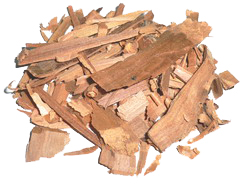
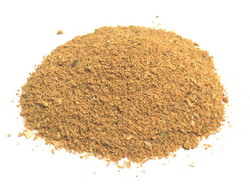
Sandalwood chips and powder are used to craft pure sandalwood incense or heated directly for their aroma. Powdered sandalwood is also commonly steam-distilled to extract sandalwood essential oil.
Sandalwood from different regions shows distinct brown tones and growth-ring patterns. Pacific Islands sandalwood tends to be lighter in color with a scent closest to Indian sandalwood; Indian sandalwood has a richer reddish-brown tone; and Australian sandalwood is lighter with a crisp, refreshing aroma—though shade also depends on whether the wood comes from the inner or outer heartwood. As a general rule, the root section offers the highest quality, and grading relies on visual inspection and experience.
Many sandalwood beads, bracelets, and malas on the market are fake—often polished with oil for shine and scented with perfume or plain wood notes. Unprocessed, uncoated beads are the best choice, and we carry top-grade genuine Indian and Pacific Islands sandalwood beads.

Genuine High-Grade India Sandalwood Beads (Unprocessed) — SGD $200 – $250

Genuine High-Grade Pacific Islands Sandalwood Beads (Unprocessed) — SGD $200 – $250
Designed to heat agarwood or sandalwood chips evenly between 80 and 220 degrees Celsius °C, this electric burner brings out the aroma and benefits cleanly without heavy smoke. It can also be used with aromatherapy essential oils or other natural woods. Indicative Price: SGD $150.
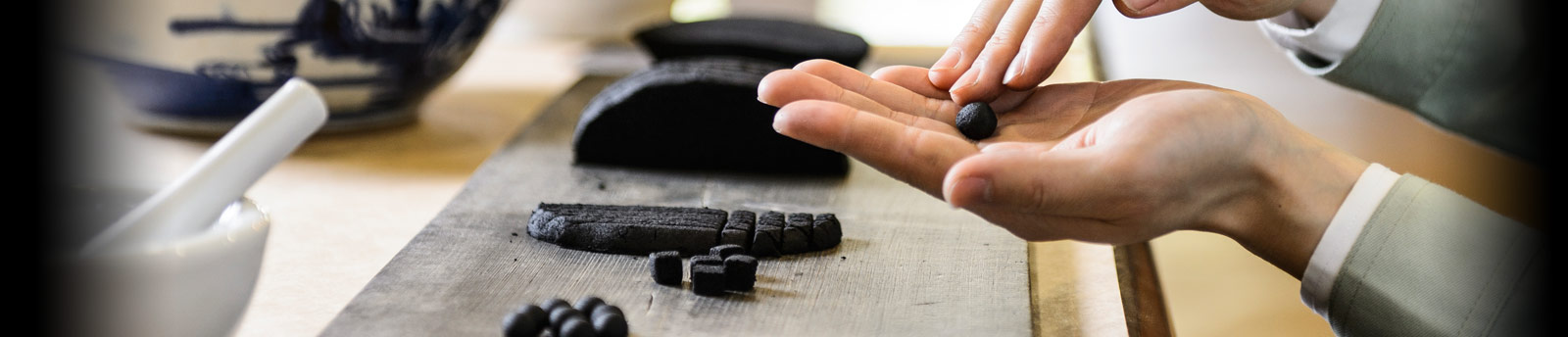
This silver-coated charcoal is made specifically for heating agarwood cleanly. It lights easily and burns steadily—simply light it and rest it over an ash base. For step-by-step usage, see “How to Burn Agarwood Chips Using the Japanese / Arabic Incense Charcoal Method.”
Each box contains 20 pieces (5 bars × 4 pieces). Indicative Price: SGD $25 per box.
100% Made in Japan.
Trusted for steady, clean burning, it is also used for shisha in Middle Eastern countries such as Saudi Arabia, Kuwait, and Bahrain.

What is Agarwood?
Agarwood Interesting Facts

Agarwood Beads & Bracelet
Agarwood Oil

Agarwood Incense

Agarwood or Aloeswood
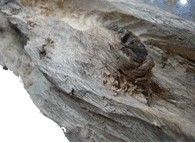
Agarwood Types and
Comparisons
Agarwood Charcoal
Copyright © Wood of the Gods (Mt Meru Consultants) 2026. All rights reserved.




 send message
 WeChat QR